The question we hear most when someone books tint is simple: what is legal in Utah? The short answer fits on a sticky note. The longer answer matters more, because the number on the film and the number an officer reads on your window are two different numbers.
- Front side windows
- At least 35%
- Windshield
- More than 70%
- Rear side and back glass
- Any shade
- Mirrored or metallic film
- Not allowed
- Variance when metered
- 5%
- A violation is
- An infraction
Utah tint law, window by window
The Utah Highway Patrol publishes the limits from Utah Code 41-6a-1635, in effect since May 7, 2025. Every percentage below is visible light transmission: the share of daylight that makes it through the window.
Front side windows
The driver and front passenger windows have to let in at least 35% of light. UHP allows a 5% variance when a peace officer meters the glass.
Windshield
The windshield has to let in more than 70% of light. Non transparent material is allowed in two places only: along the top edge, down to the AS-1 line or the top four inches, and in an area up to 3 by 4 inches in the lower left corner.
Rear side windows and back glass
Everything behind the driver can be any shade. The one condition is mirrors: if the rear windows are tinted, the car needs both a left and a right side mirror.
Mirrored and metallic film
Any material with a metallic or mirrored appearance is prohibited on every window, whatever its percentage.
If you have seen 43% quoted for the front doors, that is Utah's older limit. Some guides online still carry it.
Why glass and film read lower together
A 35 film lets through 35% of the light that reaches it. The film goes on glass, though, and glass on its own never passes all of the light. The two multiply.
Say your side glass passes 80% before any film. Put a 35 film on it and the window passes 35% of 80%, which is 28%. That is the number a meter sees. It sits under 35, and under the 5% variance as well.
Factory glass varies from car to car, and the only way to know what yours passes is to meter it. Try a few pairings here on a real cabin.
From the driver seat.
Pick a film and the glass it goes on. The side window darkens to the film, and the meter shows what the glass and film read together.
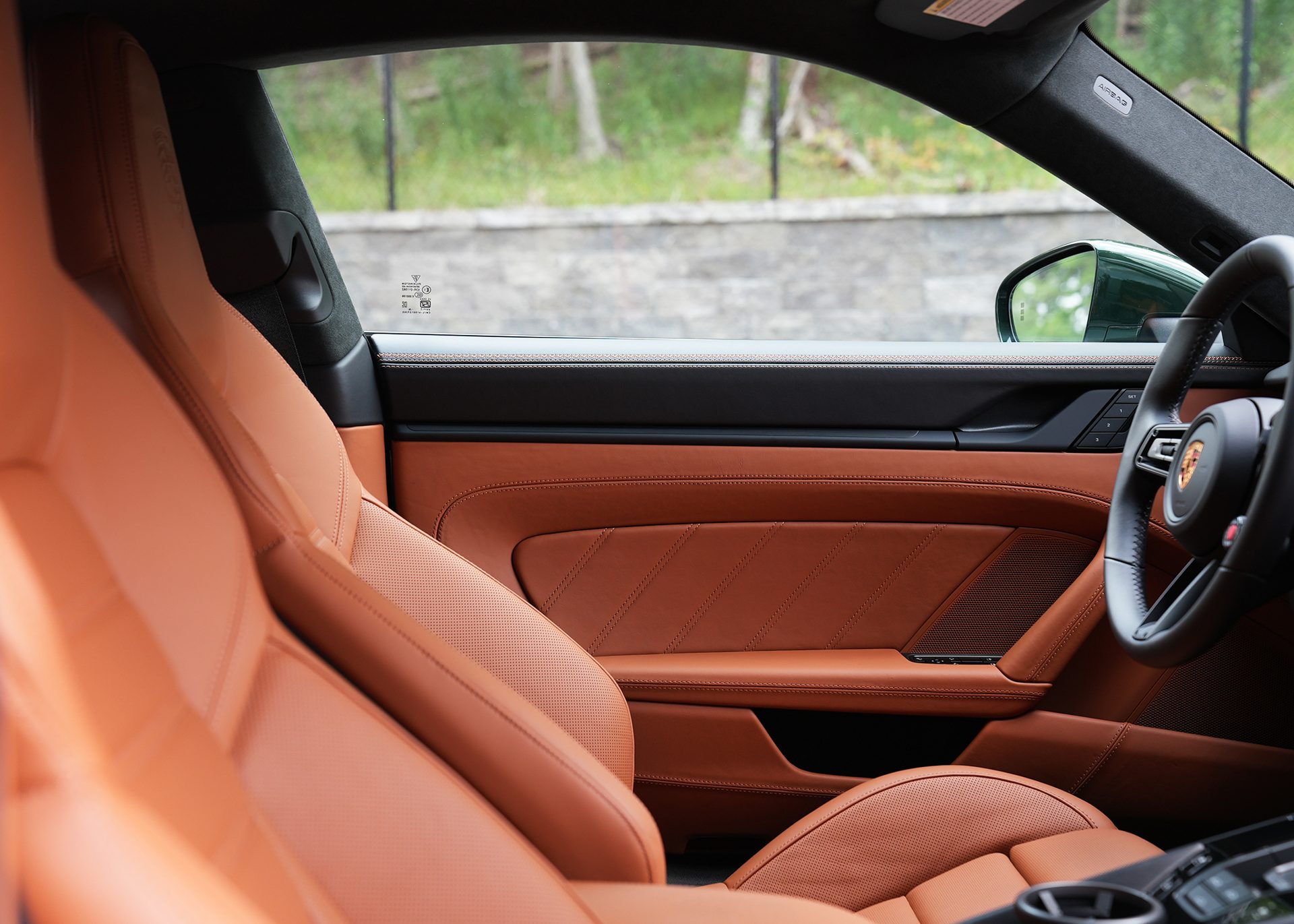
35 film on glass that passes 80 lets 28 percent of the light through.
Two things stand out once you try it. Clear glass leaves very little room under 35 on the front doors, so the film number and the metered number drift apart fast. Behind the driver, the meter stops mattering, which is why the back half of the car is where the darker shades go.
Picking a shade for each window
A common setup is one shade on the front doors and a darker one behind. The front stays inside the law, and the rear seats, the cargo area and anything you leave in the car get the privacy and the shade.
If you carry kids in car seats, the rear doors are the windows that matter most to them, and they are the ones Utah leaves entirely up to you.
The windshield is its own decision. Most of it has to stay close to clear, so a full windshield film has to be a very light one. A sun strip across the top, down to the AS-1 line, is the other option Utah allows.
The films we install
Shade is one choice. The film is the other. We install four LLumar films on side windows and back glass, each priced for the side windows and the rear window:
- ATC, a dyed film from the LLumar retail line. From $250.
- CTX, a ceramic film and the one we install most. From $450.
- FormulaOne Pinnacle. From $650.
- FormulaOne Stratos, the top of the range. From $850.
All four block 99.5% of UV. On windshields and glass roofs we install AIR, LLumar's near clear ceramic film. The window tint page lays the four films out side by side.
Every install carries our no fault warranty: any window, any reason.
Before you book
Send us the year, make and model and how you use the car, or bring it to either studio. We will talk through a shade for each window and give you a price for your car.
Source: Utah Highway Patrol, Window Tint Requirements, effective May 7, 2025, under Utah Code 41-6a-1635.
Questions
Is 35% tint legal in Utah?
On the front side windows, Utah requires at least 35% of light to get through, with a 5% variance when an officer meters the glass. The meter reads the glass and film together, so a 35 film on factory glass reads lower than 35.
Why does my 35% tint meter lower than 35?
The film and the glass multiply. A 35 film on glass that passes 80% lets through 35% of 80%, which is 28%.
Can I tint my windshield in Utah?
Yes, within limits. The windshield has to let in more than 70% of light. Darker material is allowed only above the AS-1 line or in the top four inches, plus an area up to 3 by 4 inches in the lower left corner.
How dark can rear windows be in Utah?
Any shade. Rear side windows and the back glass have no limit, as long as the car has both a left and a right side mirror.
Is mirrored tint legal in Utah?
No. Utah prohibits any material with a metallic or mirrored appearance on any window.
What happens if my tint is too dark in Utah?
A window tint violation is classified as an infraction.
Does LUXE warranty window tint?
Yes. Every tint install carries our no fault warranty: any window, any reason.